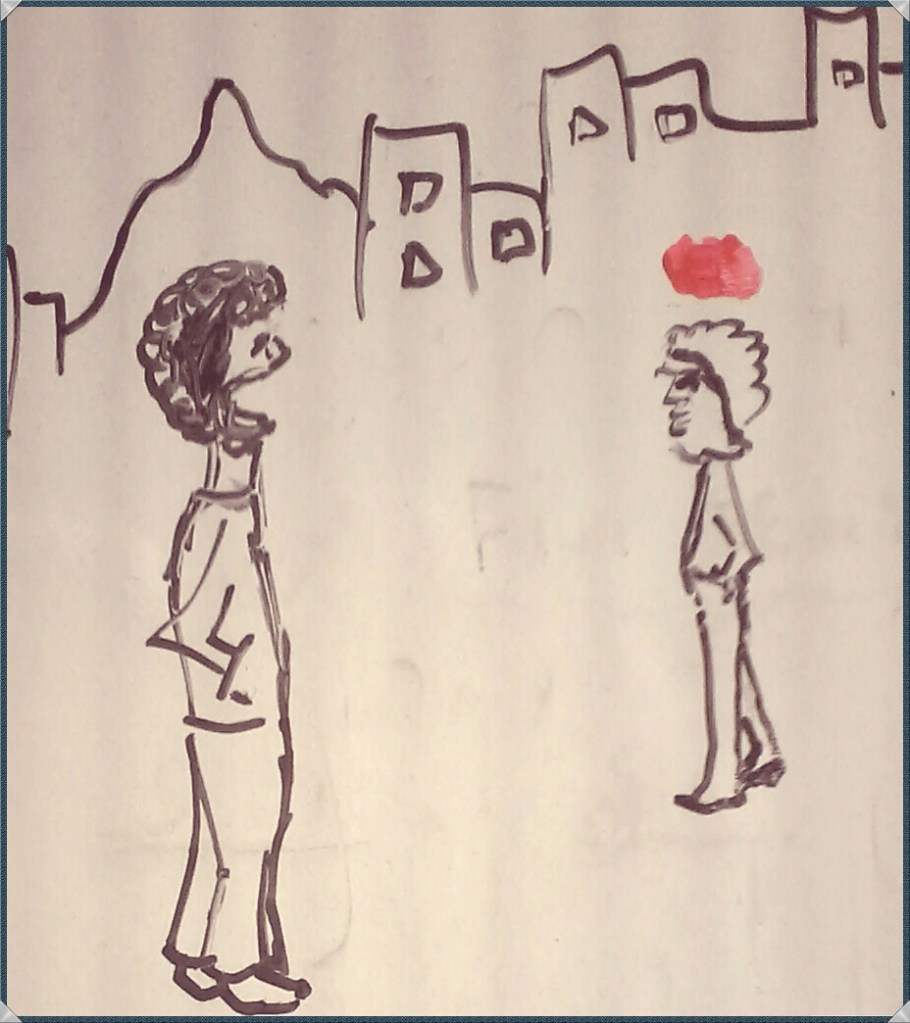
John

Inglês com textos

Nesta nova seção, denominada “Inglês com textos” publicarei textos e vídeos com a finalidade de auxiliar você que deseja aprender inglês ou aprimorar seus conhecimentos nesse idioma. Os textos serão inéditos ou das listas que fazem parte das várias seções desse blog. Os vídeos conterão o texto em inglês e a narração nesse idioma juntamente com a tradução em português. O conteúdo servirá para familiarizar-nos com a língua inglesa e provocará uma agradável imersão no mundo da literatura.  Espero que gostem. Bons estudos!

João finalmente aposentou-se. Há trinta e cinco anos ingressou em uma importante repartição governamental; de onde ganhou o sustento, constituiu família e aprendeu muito. João é pessoa do tipo organizada, para quem as ações não podem abrir mão de bom e prévio planejamento. Aprendera isso desde muito cedo, ainda na infância, com os pais e na escola; Na sua infância era corrente a ideia positivista de progresso. Ensinaram-lhe, por exemplo, que para frente é que se anda; que é a vida um caminho constante rumo à felicidade, desde que fossem adotados os procedimentos técnicos para trilhar o caminho até ela. Mais tarde, com a experiência, João concluiu que isso não passava de conversa pra boi dormir. Se fosse verdade seria o mundo um paraíso, de tão velho que é. A vida e os anos de trabalho ofereceram-lhe a matéria prima para a reflexão, no contato com as pessoas e nas horas de leitura na biblioteca, local que aprendeu a frequentar e passar muitas das suas horas de folga. João é antes de tudo uma pessoa culta, que tenta apropriar-se de boas ideias com a finalidade de entender melhor o mundo à sua volta.

Agora, com tempo disponível, adotou fazer as coisas que mais gosta; ler, ouvir música, caminhar, entre outras. Mas pode principalmente pensar, botar em prática tudo que elaborou meticulosamente durante anos. Que coisa boa é a mente, pensou João! Uma enciclopédia viva, que pode sair pelo mundo semeando boas soluções. Ao longo da vida  foi acumulando experiência, primeiro sem nenhuma pretensão, depois, de forma mais objetiva. Muitas vezes, ao caminhar por sua cidade, pegou-se imaginando porque grande parte do que ela oferece é desconfortável: calçadas intransitáveis, ruas esburacadas, praças sujas, trânsito caótico, insegurança e outras mazelas.

Ele sabe que sua cidade poderia ser melhor. Sabe também que a relação povo – Estado é hipócrita e viciosa, pois o primeiro reclama sem fazer a sua parte; o segundo tenta agradar fazendo uma parte e desprezando a população por trás dos panos. No caso das ações para melhoria de nossas vias públicas,  mesmo que o poder público aumente seus gastos nesse sentido, ainda assim nada mudaria em essência, porque tudo depende de boas ações conjuntas, envolvendo todos os indivíduos que ali residem. Mais valem ações coletivas que carradas de milhões em dinheiro gastos em obras que, depois de concluídas, não serão conservadas, porque seu povo não aprendeu a dar valor naquilo que é público, mas tão somente no que lhe pertence individualmente. Mas admite: de nada adianta comentar suas conclusões. Ninguém daria a mínima.

João tem mesmo muita imaginação. Anos atrás, concebeu a ideia de que as pessoas, cada uma delas, são seres autônomos e independentes. Dessa forma somos capazes de criar coisas e sentimentos próprios, imagináveis apenas pelo seu criador. Assim como Deus criou o mundo; Albert Einstein criou a Teoria da Relatividade; Shakespeare escreveu suas peças teatrais e Chico Buarque compôs suas canções; cada um de nós pode escrever a própria história e planejar a vida de modo particular, sem precisar seguir dogmas e ideologias. E foi mais longe; cada indivíduo nasce não somente para viver, mas para cria coisas boas. Criando, ajudaremos a sociedade a vencer suas adversidades quotidianas. Dessa forma, mesmo um náufrago sozinho numa ilha, poderá ter momentos de felicidade enquanto procurar descobrir formas de superar suas limitações, de fazer fogo, de proteger-se do frio, ou do sol, e sentir prazer em procurar alimento.

Concebeu um esquema organizacional de vida com focos na saúde, criação e lazer, que se divulgados maciçamente despertariam a inveja de qualquer instituição de autoajuda. Para João, as pessoas serão mais felizes se praticarem exercícios pela manhã; desenvolverem atividades criativas na maior parte do dia e dedicarem-se ao lazer no final da tarde e noite. Escreveu: “livre-se das futilidades perniciosas da Internet e da TV”. Essas mídias formam a indústria mais importante de divulgação de ideias negativas que existe, as quais impulsionam os indivíduos a investir em preocupações desnecessárias com foco na violência e na doença, coisas que só fazem mal à saúde, portanto, aprenda a filtrar as informações que recebe.    

Em seu caderno de anotações podem ser lidos esquemas que parecem terem dado muito trabalho mental antes de comporem a redação final. Não à-toa estão escritos em cima de palavras anteriormente apagadas ou pintadas com tinta de corretivo. Num rápido passar de olhos encontramos: “se pensar em escrever dez páginas, acumule vontade para escrever uma Bíblia, e alcançará seu objetivo”; “para que acumular tanta informação desnecessária? O excesso de informação atrapalha a mente”; “observe na doença apenas o processo de cura”; “aprecie coisas simples: o secar de uma roupa no varal, o brotar de uma semente na terra”. João enfim criou um verdadeiro acervo de conhecimentos na área psicossocial, que comparo ao conteúdo do conto machadiano “O espelho” — “Esboço de uma nova teoria da alma humana”.

Pensando em toda a trajetória de João, podemos perguntar: valeu a pena ele ter aprendido tanta coisa? Ele foi por causa disso mais feliz? Bem, se foi é difícil dizer, mais uma coisa é verdade: Ao manter a mente sempre ocupada, usou um remédio importante para driblar as dificuldades da vida, evitando cair em tristeza; O trabalho é o melhor remédio para a mente. As pessoas serão mais saudáveis mentalmente enquanto possuírem ocupações. Se ociosas, só conseguem acumular mais problemas.

Antônio Mangas

John (texto em inglês)

John finally retired. Thirty-five years ago he joined an important government office; where he earned his livelihood, raised a family and learned a lot. John is an organized type of person, for whom actions cannot give up good and prior planning. He had learned this from a very early age, still in childhood, from his parents and at school; In his childhood, the positivist idea of ​​progress was current. They taught him, for example, that one walks forward; that life is a constant path towards happiness, as long as the technical procedures to walk the path to it were adopted. Later, with the experience, João concluded that this was nothing more than talk to go to sleep. If it were true, the world would be a paradise, it is so old. Life and years of work offered him the raw material for reflection, in contact with people and in the hours of reading in the library, a place where he learned to frequent and spend many of his free time. João is above all a cultured person, who tries to appropriate good ideas in order to better understand the world around him.

Now, with time on his hands, he has adopted doing the things he likes best; reading, listening to music, walking, among others. But he can mostly think, put into practice everything he has meticulously worked out for years. What a good thing the mind is, thought John! A living encyclopedia, which can go around the world sowing good solutions. Throughout his life he accumulated experience, first without any pretensions, then more objectively. Often, when walking through his city, he found himself wondering why so much of what it offers is uncomfortable: impassable sidewalks, potholed streets, dirty squares, chaotic traffic, insecurity and other ills.

He knows his city could be better. He also knows that the people-State relationship is hypocritical and vicious, as the former complains without doing its part; the second tries to please by playing a part and despising the population behind the scenes. In the case of actions to improve our public roads, even if the government increases its spending in this sense, nothing would change in essence, because everything depends on good joint actions, involving all the individuals who live there. Collective actions are better than loads of millions of money spent on works that, once completed, will not be preserved, because its people have not learned to value what is public, but only what belongs to them individually. But he admits: there is no point in commenting on his conclusions. Nobody would give a damn.

John really has a lot of imagination. Years ago, he conceived the idea that people, each of them, are autonomous and independent beings. In this way we are able to create our own things and feelings, imaginable only by their creator. Just as God created the world; Albert Einstein created the Theory of Relativity; Shakespeare wrote his plays and Chico Buarque composed his songs; each of us can write our own history and plan our lives in a particular way, without having to follow dogmas and ideologies. And it went further; each individual is born not only to live, but to create good things. By creating, we will help society to overcome its daily adversities. In this way, even a shipwrecked person alone on an island can have moments of happiness as he seeks to discover ways to overcome his limitations, to make fire, to protect himself from the cold or the sun, and to feel pleasure in looking for food.

He conceived an organizational scheme of life with a focus on health, creation and leisure, which, if disseminated massively, would arouse the envy of any self-help institution. For John, people will be happier if they exercise in the morning; develop creative activities most of the day and dedicate themselves to leisure in the late afternoon and evening. He wrote: “Get rid of the pernicious futility of the Internet and TV.” These media form the most important industry of spreading negative ideas that there is, which drive individuals to invest in unnecessary concerns with a focus on violence and disease, things that are only bad for health, so learn to filter the information you receive.

In your notebook you can read outlines that seem to have given a lot of mental work before composing the final essay. No wonder they are written on top of words previously erased or painted with concealer paint. In a quick glance we find: “if you think about writing ten pages, accumulate the will to write a Bible, and you will reach your goal”; “why accumulate so much unnecessary information? The excess of information disturbs the mind”; “observe only the healing process in the disease”; “appreciate simple things: the drying of clothes on the line, the sprouting of a seed in the ground”. João finally created a veritable body of knowledge in the psychosocial area, which I compare to the content of Machado’s short story “The Mirror” — “Sketch of a new theory of the human soul”.

Thinking about João’s entire trajectory, we can ask: was it worth it for him to have learned so much? Was he happier because of it? Well, if it was hard to say, one more thing is true: By keeping his mind always busy, he used an important remedy to circumvent life’s difficulties, avoiding falling into sadness; Work is the best medicine for the mind. People will be healthier mentally as long as they have occupations. If idle, they can only accumulate more problems.

Vídeo
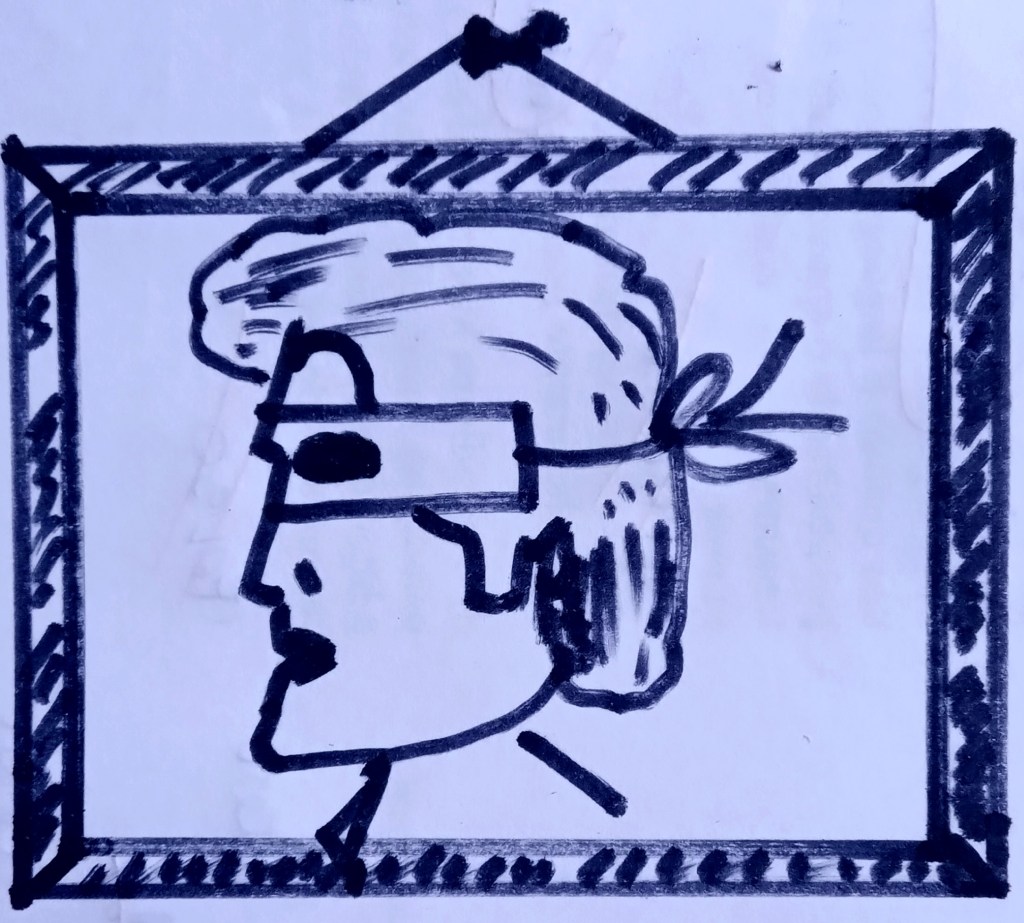
O Ladrão

Eu estava hoje por volta de 10:00 hs. da manhã em meu escritório, que fica no décimo sexto andar de um prédio próximo a um hospital de médio porte quase no centro da cidade. Hoje em dia, é grande o número de pessoas que ali chegam para o atendimento emergencial, muitas delas vítimas dessa onda de gripe que ora assola o mundo. Da minha janela posso confortavelmente observar o intenso movimento dos que chegam e deixam seus veículos aos cuidados de um guardador de carros. Outros chegam à pé ou em motocicletas, e, como ali está sempre totalmente ocupado, dirigem-se para o outro lada da rua, estacionando na grande calçada lateral ao estádio do Clube do Remo, distante da entrada uns vinte metros.

Foi o que fez uma senhora. Chegando em sua motocicleta, para deixar algum ente querido, de repente foi violentamente abordada por um ladrão. Minha atenção e dos transeuntes foi despertada com os gritos da coitada de “pega ladrão”, “pega o desgraçado”. Ela correu pela rua mostrando a bolsa aberta apontando para frente, tentando mostrar o delinquente que ia já bem à frente, driblando os carros e pessoas numa velocidade incrível. Alguns tentaram alcançá-lo, mas nunca poderiam. Dada a velocidade que empreendem esses bandidos em fuga, ele parecia mais um pombo sem asa, em busca de seu destino.

Já sem fôlego, a senhora resolveu parar, e, chorando, começou a contar o ocorrido. Com a modificação de seus semblantes, as pessoas davam a dimensão da perda que ela tivera.

Roubo, segundo o nosso Direito, é a prática de subtrair de outrem alguma coisa mediante violência. Difere de furto, quando a subtração é simples, sem a presença do proprietário da coisa. É um ato pré-histórico, pois existe desde antes da chegada dos humanos nesse planeta. Sem esforço pode-se concluir que os animais, na busca pela sobrevivência, há milênios furtam e roubam comida de seus conviveres e inimigos para saciar sua fome. Entre nós há notícia que é prática corrente em todos os tempos. Na Bíblia já encontramos relatos de roubos; Jesus, o nosso redentor, foi crucificado entre dois ladrões.

De volta ao episódio de hoje,  podemos suscitar a questão colocando o sentimento e o ponto de vista das partes envolvidas e da sociedade em geral, pois trata-se de tema por demais discutido ultimamente, motivo que me fez discorrer essas linhas, pois é somente essa a função de quem escreve; a de promover o meditar dos que não se conformam com a vida num completo caos.

O ladrão deve agora, em lugar seguro, ocupar-se de contabilizar o lucro da empreitada, conferido e separando os objetos de valor que ele poderá vender por um preço bem abaixo do verdadeiro valor destes, para pessoas não menos inescrupulosas. Claro que os objetos sem valor de venda, como os documentos da vítima, já foram devidamente descartados em qualquer córrego. A um amigo ou parente o facínora contará com ar de vitória o ocorrido, e não se furtará de encher o relato com mentiras para dar mais emoção e engordar o ego doentio.

A vítima estará sentindo uma mistura de tormentos; a dor da perda de objetos preciosos do dia-a-dia; o nervosismo de ter corrido perigo, a ira de ser injustiçada sem esperança de vingança; enfim, os tormentos de ser vítima num lugar onde permanentemente se é ameaçada: a cidade. Sem contar com a dor de ter alguém enfermo na família.

Quando olhamos para o público, as opiniões sobre como diminuir as incidências de roubo no país, elas divergem-se, e formam dois grupos, cada um canalizador de opiniões potencialmente emocionadas e convictas, que muitas vezes se colocam em grande antagonismo de discussões e até de ofensas.

Um deles entende que o roubo é praticado por pessoas condenadas que não merecem nenhuma chance e por isso deveriam ser eliminadas da sociedade. Quem pensa assim entende que tem a formula para um mundo menos violento filtrando a sociedade descartando os impuros. Tal opinião é, buscando a ajuda de Fernando Pessoa, de cunho dogmático. Os dogmáticos põe a conclusão das coisas sem explicar como chegou a ela, e sucede, como se não vê relação entre o ponto de partida para a solução de um problema com o de chegada a tal solução. Para mim agem como um tolo que, encontrando a chave de uma casa, passa a anunciar que resolveu seu problema de moradia, sem mesmo saber se tal casa existe. O outro grupo entende que quem rouba precisa de chances para redimir-se, para tanto precisa passar por reeducação e reenquadramento social. O ladrão não é inexoravelmente um ente descartável, mas fruto de uma sociedade injusta, que pode melhorar com a educação. Dessa opinião fazem parte, lembrando ainda o autor lusitano, os que pensam de maneira racional, e levam seus ouvintes até à conclusão em um processo gradual, e, ainda que estranha e paradoxal, torna-se certo ponto aceitável, por ser compreensível como se chegou até ela. Penso que, na medida em que é uma solução mais trabalhosa, quase se não complementa, então esses adeptos agem como aquele que encontrou não a chave de uma casa, mas a planta completa para edificá-la, e propagam o resultado de um lindo lar que nunca será habitado, pois a obra jamais sairá do papel.

Antônio Mangas

Life after death

Esta imagem possuí um atributo alt vazio; O nome do arquivo é 2021-08-24-10.25.31.jpg

It wasn’t so long ago that we met at Fernando’s house, my good friend. We were on that Saturday of June in a total of four people and talked about great personal matters, each counting current and ancient adventures. Our meetings used to be warm mainly because they were washed down with beers. That day I decided to report an important moment in my life, certain that my account would draw the attention of my companions.

– You know I’ve been decorated nationally in France – said promptly attracting the eyes.

– It wouldn’t surprise you. And how did it go? – asked Rui curiously.

– It was once in Paris when I was called there to give lectures on my thesis of completion of course, which versed about the immortality of the soul. I know you were curious, i never commented on this matter with you guys. Really, except for my family members, no one else knew about the adventures I had involved with after my graduation, mainly because I’ve been out of the country for a reasonable time. If you want, I’ll quote everything, because I think we have time and we’re not in a hurry, am I right?

Of course, Roberto, now that you mention it, we’re going to be happy to hear from you.

– Of course, with pleasure – And so I began to tell about that long period that was the most unusual of my life. And I started:

-“In 1996 I was attending the last year of Sociology, committed to writing my TCC: Course Completion Work, under the guidance of Professor Matilde, then highly regarded in the academic environment of Pará, and, besides being an excellent master in methodology of the humansciences, was also engaged in studying Spiritism. Because I have such occupations and even beliefs, the teacher greatly encouraged me to research the theme I chose, which was about The issue of life after death, or more specifically on The question of the impossibility of refuting the existence of lapses of life in one’s own life.

I must say that my challenge not only seemed difficult, but it was for me almost impossible to accomplish; such were the difficulties I encountered both with regard to the research itself and in relation to the people who caused me discomfort to perform the work because they thought I was going crazy and that that subject could in no way be the object of an academic research. What is certain is that, despite the sorrows, the work was thankgod completed, much because of the goodwill and patience that had for me my guidance counselor. It is also certain that the difficulties I faced were worth while having many positive consequences for me after I graduated; it is no for nothing that my life has changed a lot, I traveled the whole world, today enjoy sawerplus national and international reputation, achieved great professional achievements and material acquisitions and you know it.

We know that very well. Tell us, Tell us soon what made you a person as worthy of praise as few in this city – said Peter, a little emotional. So I kept going.

In a few days I started to receive at home some communications by phone and by letters. People full of curiosity wanted to know more about the subject of research. They called showing a lot of interest and urgency for answers. I’ve received mail from the farthest places you can imagine. A correspondence aroused my attention, came from the University of Paris, signed by the rector himself. It was attached with an airfare. They wanted me to go over there and give a lecture. They said they were very anxious for my presence. They asked for priority. That my theme had aroused enormous interest in the entire academic community of that university, of the people in general, of the city and of the whole country. Now, I confess that I was surprised and pleased with the invitation. In fact Paris was on my list of predilection among the places I dreamed of meeting one day. At that time, a trip like that would come. What’s more, people’s curiosity about my work was a source of great pride for me, of course.

During the trip, I realized that some people at airports and even on the streets wanted to talk to me, asked questions, many of which I didn’t even understand, because I didn’t even know any languages besides our Portuguese (I knew little already English). At the host University I was well received and at the hotel I avoided talking about theories, leaving this moment for the lecture on the University Campus

I began my talk explaining that with observations of daily life and theoretical studies in the field of psychoanalysis, astrology and spiritism I came to the conclusion that our life here on earth does not occur continuously, that we die a few times in the preliminary phase (infant, young and adult), returning to the normal state of the trajectory immediately, so fast that we do not notice, because the process is very subtle. When we die, we are automatically transferred to our a dimension exactly like the previous one. In fact, dimensions identical to those where we are born and develop our life trajectory coexist. We can say that the phenomenon occurs more often at times when we sleep too much; when we get seriously ill or when we go through an episode of great danger. One proof that there are other dimensions is that we constantly come across physical meta phenomena, which are hardly perceived by most people. Metaphysical phenomena can be understood as manifestations that leak from other dimensions and occur in the form of visas, extraterrestrial visits, dreams, etc. The difficulty of proving the existence of our dimensions occurs because only a very limited number of people; the most sensitive people with paranormal connections can perceive the leaked manifestations of the other parallel dimensions. When we die in old age, we are born equally in another dimension, but in the form of babies. I say this and i say with conviction that I belong to the class of the sensitive. And I assure you that I could only carry out my studies by perceiving such phenomena of death and rebirth in practice. You can trust what I say because you have my faith and my word. I’m ready for the questions!

It was not surprising that at first my words were not easy to accept, after all it was a controversial subject and difficult to prove, especially with regard to the moment of a person moving to another existential plane; what kind of signals would sensitive people receive to perceive such a phenomenon. At this crucial moment to make me believe and understand, I explained that I perceived in people a kind of sign above the head; a kind of reddish smoke insignia of the phenomenon of transposition into the afterlife. After that explanation, I confess that I felt better accepted. Some present were thoughtful, others even declared that at some point they had noticed this sign in other people.

I said these things with great conviction because I really owned it. My studies and observations led me to speak with resourcefulness and without fear, because I was sure of what I was transmitting. What’s more, my monograph was well written and contained the minutiae that put out of the field any doubt.

What was not clear in the exhibitions could be clarified in my writings, which counted as another asset in favor of my theories. When the inquisitor, in opposition, persisted at some point, I had as a resource instructing him to read such and such items on such pages and put any more persistent scholar to twist his arm in my favor. From this lecture my name became national news and not to-forego I went two days ago called by the president to be decorated in a beautiful ceremony at the “Palais de I’Élysée.

Soon I was not lacking news from home, realizing that many higher education centers, as well as religious centers and other people were also interested in my lecture. According to my wife one of those interested deserved attention, because it was a very rich and powerful Saudi Sultan who kept calling, and offering worlds and funds in exchange for my presence in his palace, in the city of Rasd.

That late afternoon in Paris I felt tired and decided to go rest in the hotel. There, lying in a comfortable bed after a refreshing bath, I began to meditate as, a simple citizen of northern Brazil, so despised region in that country, was going through such a significant moment; A week ago in Belém I led a simple life, chasing precarious driving on the way to university or work, now I saw myself in the possibility of choosing the country where I would like to expose my ideas in front of curious and awe-free audiences.

In my subconscious hung the words of Bethlehem concerning the Sultan’s curiosity, and I thought; Why not, take a flight to the Middle East. And soon came the reminiscences of childhood, thoughts and dreams about the stories of deserts and oasis told by the elders. Beautiful and grand palaces full of statues in gold and silver, with extensive ceramic floors of sparkles and fantastic designs and emanating a coldness of wanting to lie on the floor and sleep. On the walls millions of far-fetched reliefs and designs of bright and blinding colors, with details so perfectly carved and painted that demonstrate the patience and pleasure of that people for life and good taste, so far from the inhabitants of the oppressive western cities.

Without a waste of time I requested the dispatch of the tickets and in three days I contemplated from the window of an Emirates Airwais Boeing the vaults of large mosques of Rif, before landing in that city. Waiting for me at the airport I came across the great Morramed Al Salem, the sultan who very much wanted to hear from about the new theories of eternal life. In his beautiful palace I was greeted by a large entourage of scholars who did not stop asking questions during the three days i stayed there, always with the help of an interpreter. On the first day, however, I was alone with Salem, who was very attentive and to some extent showed nervousness during my explanations. That day, by lunchtime Salem came to confide to me that, in fact, because he holds many riches and great power, He would like to have, say, a kind of security as to the fate of his valuable possessions, his family, his power; great power, which I could perceive by the respect and veneration dedicated to it by the local people. The beauty of the palace where I stayed contained much of the prints and details I imagined. In those days I could better understand the behavior of the Arab people and I was very impressed with their religiosity and the sociability that unites them.

After two days, after a long and ecstatic period of lectures around town, I rested in my great room. I started to think it was time to take a break. The other day I requested my return to Brazil, something that was granted to me not without first having promised that I would return to that country soon. On my return flight, on the Casablanca – Rio route, I suddenly found myself in great trouble. I woke up with tremendous excitement among the passengers. A gentleman sitting next to me informed me that the plane was in a crash and that we would soon make a forced landing in the waters of the Atlantic. The recommendations were for us to remain seated, in a waiting position for impact. At first I thought I’d run away in desperation, yell at everyone, beg, i don’t know what to do with the pilot. How could I die now, at the beginning of fame? But soon I came to the situation and understood that the best decision would be to sit and pray for a miracle. I had time to look back and see over everyone’s head a lot of reddish-colored smoke. I don’t have to say that it greatly increased my distress. Then I fell asleep, and when I woke up I was informed that the plane was no longer in a crash and that we would soon land with tranquility. Uffa! – I exclaimed, full of relief. At the airport I was immediately commenting on what happened to the family and explaining that in that episode I had certainly passed to another dimension. Some believed it, others, not so much.

– The thing is, I’m here telling the story, which I hope will be one of many to come! – said raising the glass to shield.

– Of course you’re still going to count a lot, Roberto! – they shouted the other ones by lifting each one their glass to shield.

Antônio Mangas

Música Conto de fadas

Conto de Fadas    (letra e cifras)

A                                                                 C#m

Quando eu era um menino, sonhava demais

D                                                                   E

levava a vida como fosse um conto de fadas

Bm                                   F#m

Eu, meus pais e meus irmãos

Bm                                               F#m

Ai meu Deus, como tudo era bom

Bm                              F#m

Na escola aprendia escrever

Bm                        F#m

Na rua futebol e violão

Bm                                 A7 (4)(9)

A noite namorava de mentira

F#m         Em              A7             D

E depois dormia, na frente da TV

G                                                                      F#m

Mas o tempo foi passando e eu quis me descobrir

                                                       Em

Poesia é coisa que nunca abri mão

                           A7                        D

E, quem sabe, alí, também fui felizzzzzz

D           G                                             F#m                                                             

E hoje, lembro o meu passado de magia

B7                                   Em

Se não posso voltar o tempo

                A7              D  D7

Busco a felicidade aqui

    G                                                       F#m

E hoje, lembro o meu passado de magia

B7                                   Em

Se não posso voltar o tempo

A7           G                D

Busco a felicidade aquiiiiiii.